Improving response and visibility in long-term care environments
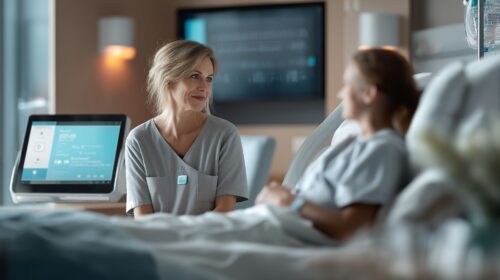
Here’s a look at where response and coordination tend to break down in long-term care environments – and how we typically address it.
Where things break down
In most homes, it’s not one system – it’s how they interact:
- Nurse call alerts that aren’t always seen or acted on in real time
- Staff response varying across shifts, units, or workload
- Alerts from different systems coming in separately, without coordination
- Limited visibility into resident movement until after something has happened
- Workarounds between systems that rely on staff memory or manual steps
We’ve seen this show up as staff doing the right things – but response still feeling inconsistent because alerts are split across systems.

How we approach this
The focus is on response.
Making sure alerts reach the right person, at the right time – and that staff can act without needing to track things down.
In most cases, that means building around a unified alerting and communication layer – not replacing everything outright.
Where we focus
Nurse call and resident response
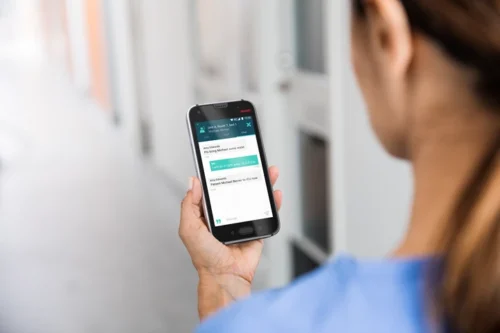
Moving away from fixed, room-based response to mobile, coordinated workflows.
- Alerts routed directly to assigned staff
- Staff can triage and coordinate without returning to a station
- Consistent response across units and shifts
- Digital logging tied to actual response, not just call activity
In some homes, this replaces situations where calls are acknowledged at the desk – but not clearly owned through to completion.
Alert management and coordination

This is usually where the biggest gap is.
Multiple systems generating alerts – but no single place where they’re managed.
- Nurse call, technical alarms, and sensors feeding into one workflow
- Alerts filtered, prioritized, and assigned
- Escalation if something isn’t acknowledged
- Reduced reliance on overhead paging and manual follow-up
We’ve seen environments where alerts from doors, nurse call, and equipment all come in separately – and staff are left to piece it together.
Resident wandering and movement visibility
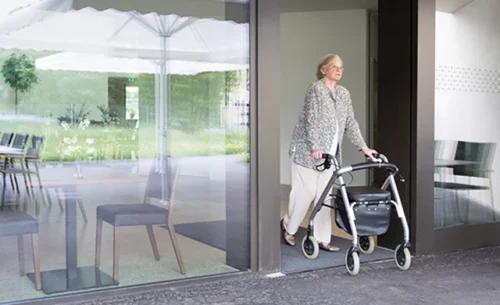
Most homes don’t lack data – they lack usable visibility.
- Discreet monitoring using wearables and location-based triggers
- Alerts based on movement patterns, not just fixed events
- Ability to identify changes in behaviour before incidents escalate
- Supports safety without making the environment feel restrictive
In practice, this often replaces reactive response – where staff only become aware after a resident has already moved into a higher-risk situation.
Supporting systems

Where needed, this extends into:
- Access control between units and secure areas
- Communication systems for staff coordination
- Integration with fire and life safety
Why this works

These systems are designed to work together.
We work closely with Ascom platforms – built specifically for healthcare environments – and integrate them with what’s already in place.
That allows:
- A single flow of alerts and communication
- Mobile-first response across the care team
- Less noise, fewer missed events
- More consistent operation across the home
What this changes
- Response becomes more predictable
- Staff spend less time tracking alerts
- Less noise across the unit
- Better visibility into resident movement
- Fewer gaps between systems
Next step
If helpful, we can walk through your current setup and identify where these gaps exist – and what it would look like to bring things into alignment.
Emotion Inc. Canada
Emotion Inc. Australia