Irving Oil Field House – Facility-wide communication and security monitoring
Irving Oil Field House
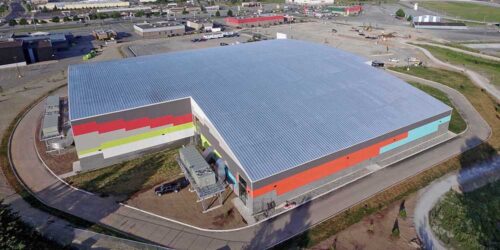
The Irving Oil Field House is a premier multi-field sports complex in Saint John, New Brunswick. Managed by the YMCA, the facility serves as a community hub for athletics, child care, and fitness.
Headquarters
Saint John, New Brunswick
Employees
11-50
Founded
2019
Industry
Sports, Fitness & Community
Focus
Community wellness and athletic excellence
Facility Type
Multi-field sports complex
Scope of Systems
Intrusion Alarm, Public Address / Critical Communications
Technology Partner
TOA (Public Address & Critical Communications), DSC (Intrusion Alarm)
- Multi-zone communication that fits daily operations
- Security coverage without adding operational burden
- User-friendly controls for daily operation
- One accountable partner from start to finish
Why Irving Oil Field House chose QSA
Irving Oil Field House selected QSA as its delivery partner to ensure public address and intrusion alarm systems were not only installed, but intentionally configured to support daily operations in a large, active community facility – with clear, local accountability beyond installation.
Rather than treating these systems as standalone infrastructure, the Field House prioritized a partner who could take ownership of system behavior in live conditions – from commissioning through ongoing operation.
The decision was guided by the following priorities:
- A single partner for installation, commissioning, and long-term support
- Proven experience delivering systems in live, multi-use environments
- Configuration focused on real-world operation, not default settings
- Clear ownership and accountability beyond project completion
“The system does exactly what we need it to do, where we need it to do it. It’s reliable, intuitive for staff, and hasn’t required ongoing attention.”

Challenge
Delivering reliable communication and security coverage in a complex, multi-use environment
The Irving Oil Field House is a modern, large-scale indoor sports and recreation complex serving the Greater Saint John community. Owned by Greater Saint John Field House Inc. and operated by the YMCA of Southwestern New Brunswick, the facility supports a wide range of athletic, recreational, and community programming for people of all ages and abilities.
The 100,000+ sq. ft. facility includes multiple indoor turf fields, walking tracks, fitness and exercise spaces, childcare areas, and community rooms – each with different operational requirements. As a brand-new build, the Field House required foundational infrastructure to support daily operations from the moment doors opened to the public.
From the outset, leadership needed:
- A facility-wide public address system to support announcements, programming, and daily coordination
- Intrusion alarm coverage for general and restricted areas
- Systems that could scale across multiple zones while remaining simple for staff to operate
- Reliable performance without ongoing troubleshooting or operational burden
The challenge was not a lack of technology, but ensuring that systems were configured to reflect how the facility would actually function day-to-day across changing activities, staff shifts, and space configurations.
Managing complexity without creating operational friction
The Field House’s layout introduced inherent complexity:
- Two indoor turf fields
- Two indoor tracks, with the primary track divisible into separate zones
- Fitness rooms where uninterrupted activity was a priority
- Shared corridors and public gathering spaces
- Multiple staff-operated control points throughout the building
Announcements needed to reach the correct areas without disrupting unrelated activities. Background music needed to remain consistent in public spaces while remaining isolated from athletic or instructional areas. At the same time, intrusion alarm coverage was needed to protect the building after hours without disrupting public use or overcomplicating staff workflows.
Without careful planning and commissioning, systems of this scale can quickly become difficult to manage – leading to operator error, inconsistent performance, and unnecessary service calls.
Solution
Public address and intrusion alarm systems configured for real-world use
QSA was engaged to install, configure, and commission the Irving Oil Field House’s public address and intrusion alarm systems, working in coordination with the electrical contractor and building stakeholders.
The scope included:
- A TOA public address system designed for multi-zone, multi-source operation
- A DSC security system for general and restricted areas
- Full system programming, testing, commissioning, and owner handover
Rather than relying on default settings, QSA focused on aligning system behavior with the facility’s actual operating patterns – prioritizing clarity, reliability, and simplicity for end users.
Multi-zone PA design built around facility operations
The TOA PA system was programmed to support:
- Independent control of each field and track zone
- Flexible operation when spaces are divided or combined
- Multiple announcement points with clearly defined control boundaries
- Continuous background music in corridors and public areas
- Announcement-only functionality in fitness and exercise rooms
Despite the complexity behind the scenes, the user interface was intentionally simplified. Most staff interact with a limited-function control panel, allowing them to make announcements or adjust volume without needing technical knowledge of the system.
This approach reduced the risk of accidental changes while ensuring the system could adapt to the facility’s varied daily use.
Practical intrusion alarm coverage to support staff and facility security
The DSC intrusion alarm system was implemented to monitor and secure the Field House after hours across a variety of zones, supporting both facility security and operational simplicity.
The system provides:
- Clear separation between public and restricted spaces
- Alarm coverage for publicly accessible and sensitive areas
- Straightforward operation aligned with staff workflows
The goal was not over-securitization, but appropriate control – protecting staff and facility assets without disrupting the welcoming, community-focused environment.
Coordination, commissioning, and handover
QSA coordinated closely with the electrical contractor during installation and worked directly with the building owner during commissioning. Final programming was refined based on operator feedback to ensure the systems behaved as expected in live conditions.
The project was completed within the allocated timeline and transitioned cleanly to operations, with staff confident in how to use the systems from day one.
Outcome
Stable systems, simple operation, and long-term confidence
Since commissioning, the Irving Oil Field House’s public address and intrusion alarm systems have operated reliably with minimal service intervention.
Early support requests were limited to minor user adjustments – typically resolved quickly through reprogramming. Once configured, the systems have remained stable over multiple years of daily use.
Key outcomes include:
- Clear, intelligible communication across all facility zones
Announcements reach intended areas without bleed-through or disruption.
- Simple, intuitive operation for staff
Day-to-day users interact with straightforward controls designed around real workflows.
- Intrusion monitoring that supports security without disrupting public use
General and staff-only areas are protected without creating friction.
- Low long-term maintenance burden
Proper commissioning reduced ongoing support needs.
- Clear accountability when support is needed
Facility staff know exactly who to contact when questions arise.
“After commissioning, the systems required very little follow-up. When questions did come up, we knew exactly who to call and issues were handled quickly. That clarity makes a big difference.”
Looking Forward
With professionally configured communication and intrusion alarm systems in place, the Irving Oil Field House is well positioned to support continued growth in programming and community use.
The flexibility built into the systems allows the facility to adapt as spaces are reconfigured or operating needs evolve – without requiring replacement or major rework.
Recommendation for Other Facilities
Configure for people, not just specifications
The Irving Oil Field House highlights a key lesson for large, multi-use facilities: Successful systems are not just installed – they are intentionally configured for how people actually use them.
Key considerations include:
- Design zoning around real operating scenarios
- Keep user interfaces simple, even when systems are complex
- Invest time in commissioning and handover
- Choose trusted, locally accountable partners who live and work in the communities they support
In environments where communication and alarm systems are part of daily operations, the difference between “installed” and “done right” is felt every day. At the Irving Oil Field House, thoughtful configuration and accountable delivery ensured the technology quietly supported the facility – without becoming a distraction.
Other Resources
Beauceron Security – AI-enabled deterrence system for after-hours protection

Hikvision in Municipal Public Safety Camera Programs: Governance and Lifecycle Considerations
Colpitts Developments – Reliable entry, access control, and CCTV at The Station House
York Care Centre – Mobile nurse call system for faster response and safer...
See how community and recreation facilities
across Atlantic Canada partner with QSA
What is your work email?